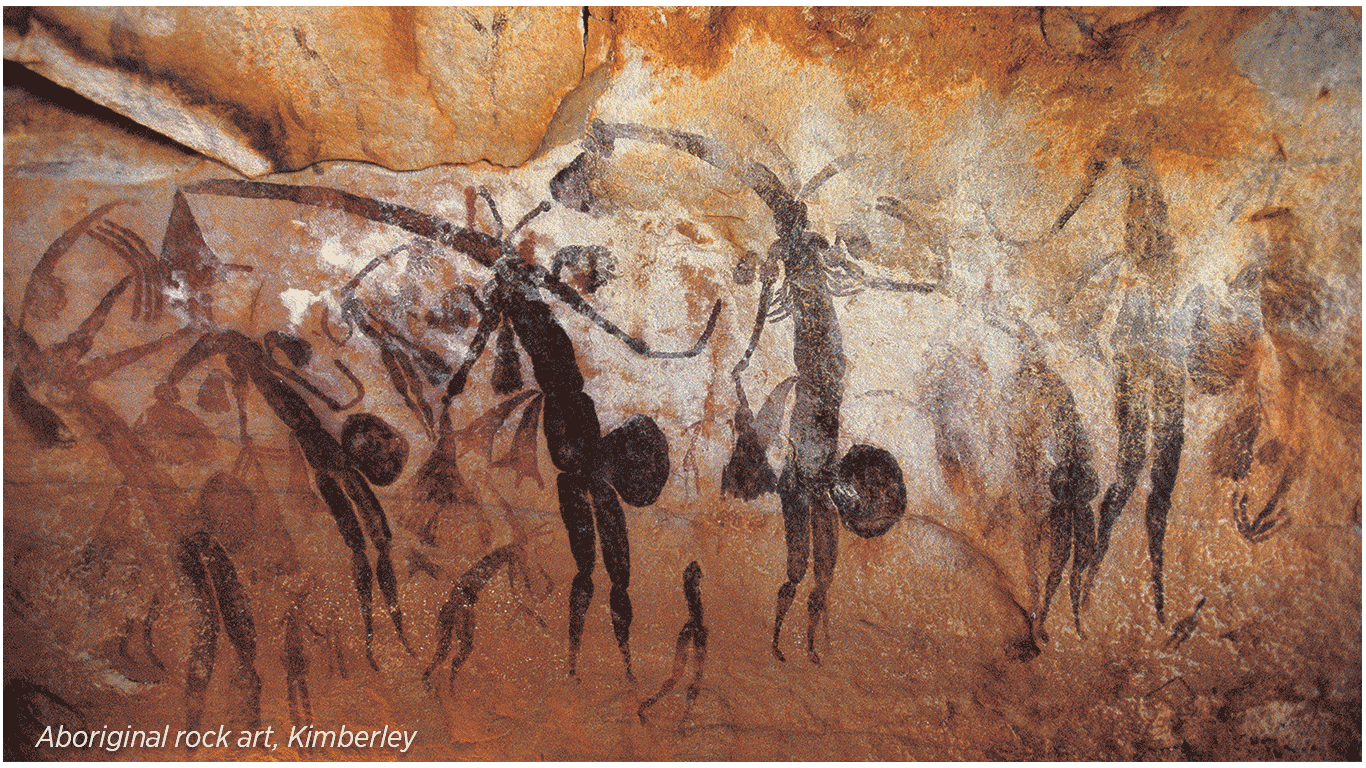
ART AND LANGUAGE Aboriginal Australians believed that their ancestors created the land and were ‘great spirits of the Dreaming’ who controlled the movements of the planets and stars, the seasons and the tides. Aboriginal law and custom evolved from the myths that grew up around these ancestor figures. They also believed that the process of telling these myths whether in dance, song or painting enabled them to draw on the power and influence of their ancestral spirits. In a culture which has no written language, their very distinctive art form, which reflects a deep connection with the land and the environment, evolved over many millennia to record the beliefs and stories from the ‘Dreaming’, enabling them to be passed on to successive generations.
There are more than 365 Indigenous language groups in Australia; at least 60 of these are spoken in Western Australia alone. As well as English, most adult Aboriginal people in the Kimberley, Pilbara and desert regions of the North West speak at least one traditional language, and possibly varieties of Aboriginal English or Kriol, an Australian Creole language developed out of necessity between the Indigenous people and European settlers.
CULTURAL EXPERIENCES You can take a guided walking tour or head out on a camping safari, led by traditional custodians of the land. Enjoy bush tucker, listen to stories and music-making – you might even get to have a go at throwing a boomerang. The ancient open spaces of the Pilbara and Kimberley regions have been home to Indigenous Australians for thousands of years and it’s here that you are most likely to see people maintaining their traditional way of living. You can also view traditional rock and cave paintings, some of which are estimated to be up to 50,000 years old.
TRAVELLING THROUGH ABORIGINAL LANDS There are some simple rules that travellers and visitors should take into consideration when entering or passing through Indigenous communities. Please remember you are guests of the traditional custodians. Do introduce yourself on arrival if you are staying, and don’t drive around the area or reserve without the community’s knowledge and permission. If you want to take photographs or film the local people make sure you ask first, and don’t attend ceremonies or meetings without an invitation.
To learn more about the Indigenous people of Australia, or to find out how you can immerse yourself in their culture, contact the WA Indigenous Tourism Operators Committee (WAITOC), a not-for-profit organisation promoting authentic Indigenous tourism ventures. Permission to visit remote Aboriginal communities is granted through the Aboriginal Lands Trust at the Department of Planning, Lands and Heritage. Visit www.dplh.wa.gov.au