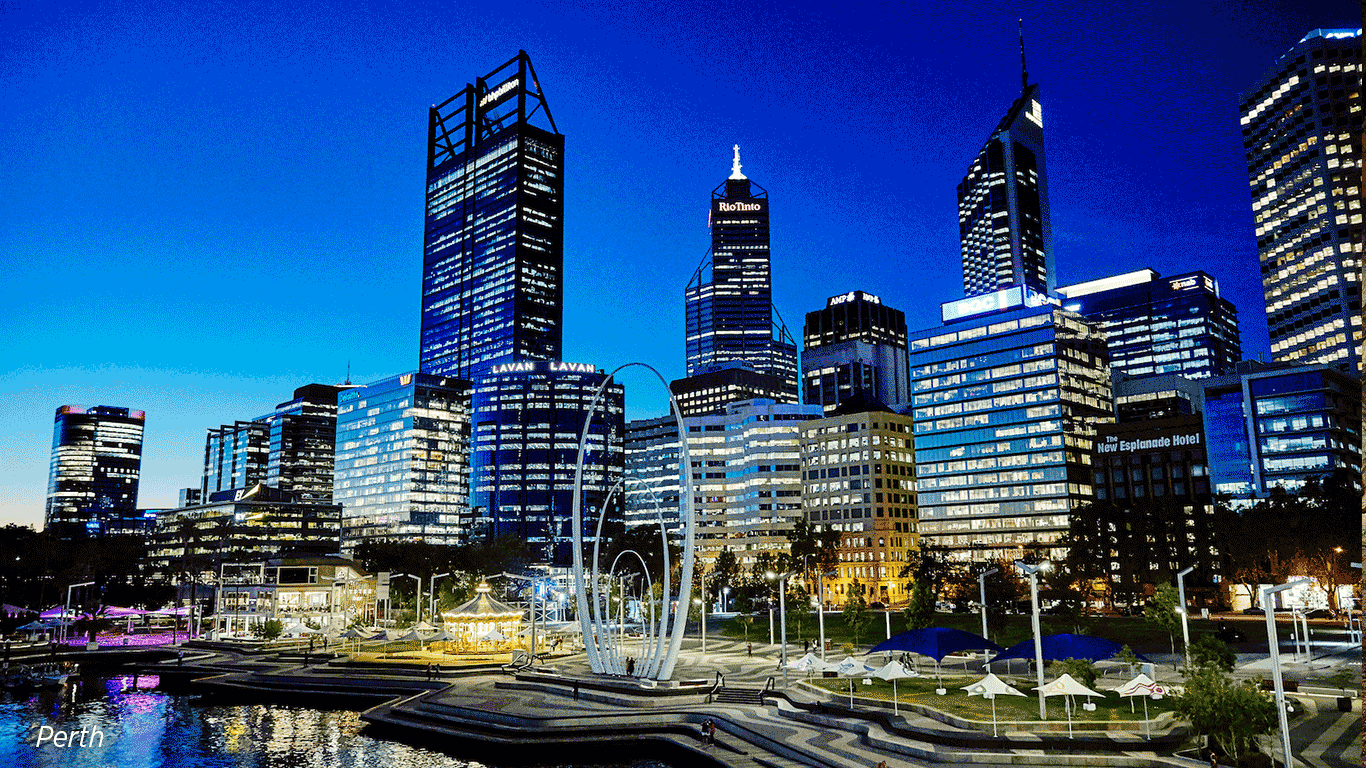
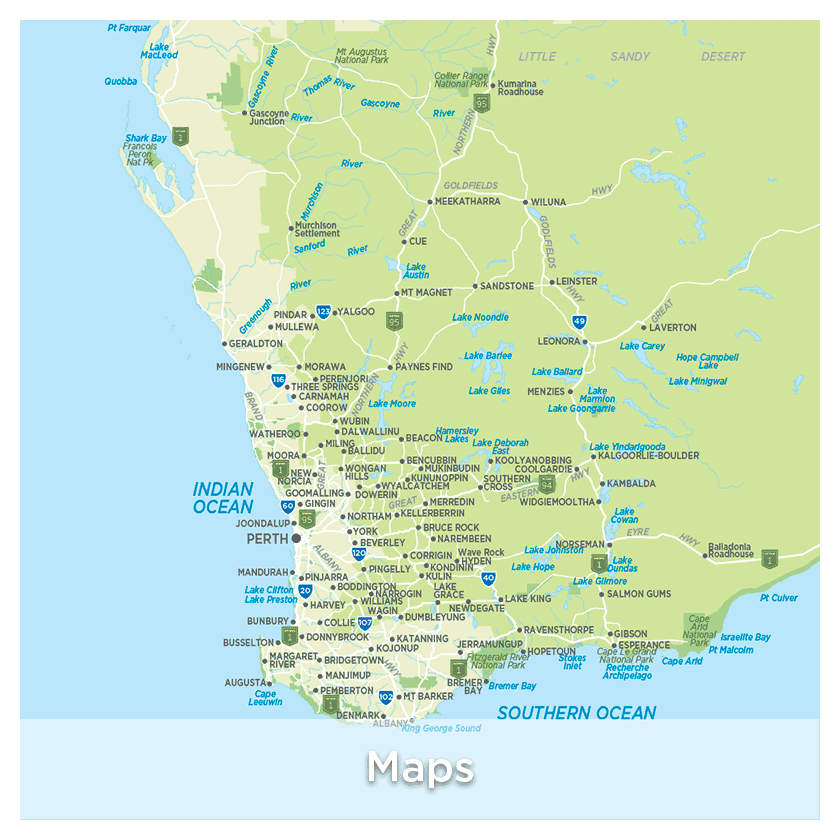
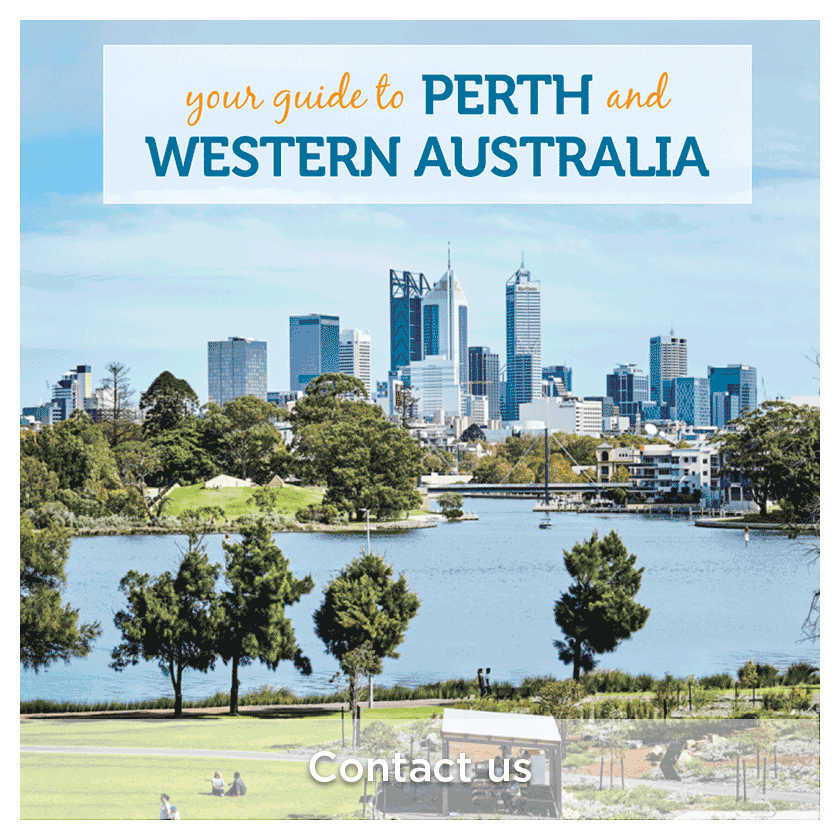
PERTH Located at 31.95°S, 115.85°E on the Indian Ocean coast of mainland Australia, thousands of kilometres from any other capital city, Perth enjoys its status as a remote, isolated and unique destination.
Western Australia has a land mass of more than 2.5 million km2 and constitutes about one third of the Australian continent. 2.9 million people live in WA with Perth being home to more than 2 million, concentrated in an area of around 5,000 km2. The balance of the population are found in cities and towns throughout the state, the largest of which have populations of around 50,000 people.
VISITING WESTERN AUSTRALIA Everyone travelling to Australia must present valid and approved travel documents as evidence of their identity and nationality. Regardless of the length of stay you are planning you must have a valid Australian visa. In most cases visas must be applied for before you arrive in Australia. This can be done either online, through a migration agent, a travel agent or at an Australian Visa Application Centre which are located throughout the world. New Zealand citizens who hold a valid New Zealand passport can be granted a Special Category visa on arrival in Australia subject to them meeting health and character requirements.
TIME ZONE Western Australia is on Western Standard Time (WST), eight hours ahead of GMT, the same as Singapore and Malaysia. Perth is 90 minutes behind Adelaide and Darwin and two hours behind the other Australian states. As Perth does not take advantage of daylight savings these differences increase by an hour from September to March in Melbourne, Sydney, Adelaide and Hobart.
CLIMATE Due to the vast size of the state, visitors will find the climate varies greatly depending on location, ranging from mild, temperate climes to sub-tropical and tropical zones.
Perth enjoys a Mediterranean climate, with warm to hot summers and cool, wet winters.
With an annual average of eight hours sun per day, Perth is Australia’s sunniest capital. Summer temperatures average between 29°C and 32C° during the day and between 16°C and 18°C at night.
It is not unusual for summer temperatures to reach 35°C for three or four days in a row, especially in February and March. The afternoon sea breeze, known affectionately as ‘the Fremantle Doctor’ offers relief to coastal towns during the summer. The highest daily maximum temperatures recorded in Perth are around 44°C.
ELECTRICITY The electrical current in Australia is 240/250 volts AC 50Hz. The Australian three-pin power outlet is different from many Asian and European countries. If your appliances are 100V check if there is a 110/240V switch; if not, you will need an adaptor which can be bought at many shops. Universal outlets for shavers are found in most hotels.
CURRENCY The basic unit of currency in Australia is the dollar (100 cents = one dollar). Notes are plastic and come in denominations of $100, $50, $20, $10 and $5, while coins are produced in $2 and $1 (gold) and 50¢, 20¢, 10¢ and 5¢ (silver) denominations. Shops round their bills up or down to the nearest 5¢ on cash sales. Credit/debit card sales are charged at the exact amount of the sale.
Banks are generally open from Monday to Fridays. Some are open on Saturday mornings; check their websites for more information. 24-hour ATMs and EFTPOS facilities are readily available throughout the state. In Australia 4-digit PINs (personal identification numbers) are the primary form of authorisation for credit and debit cards.